
The Complete Buyer’s Guide to Folder Inserter Machines
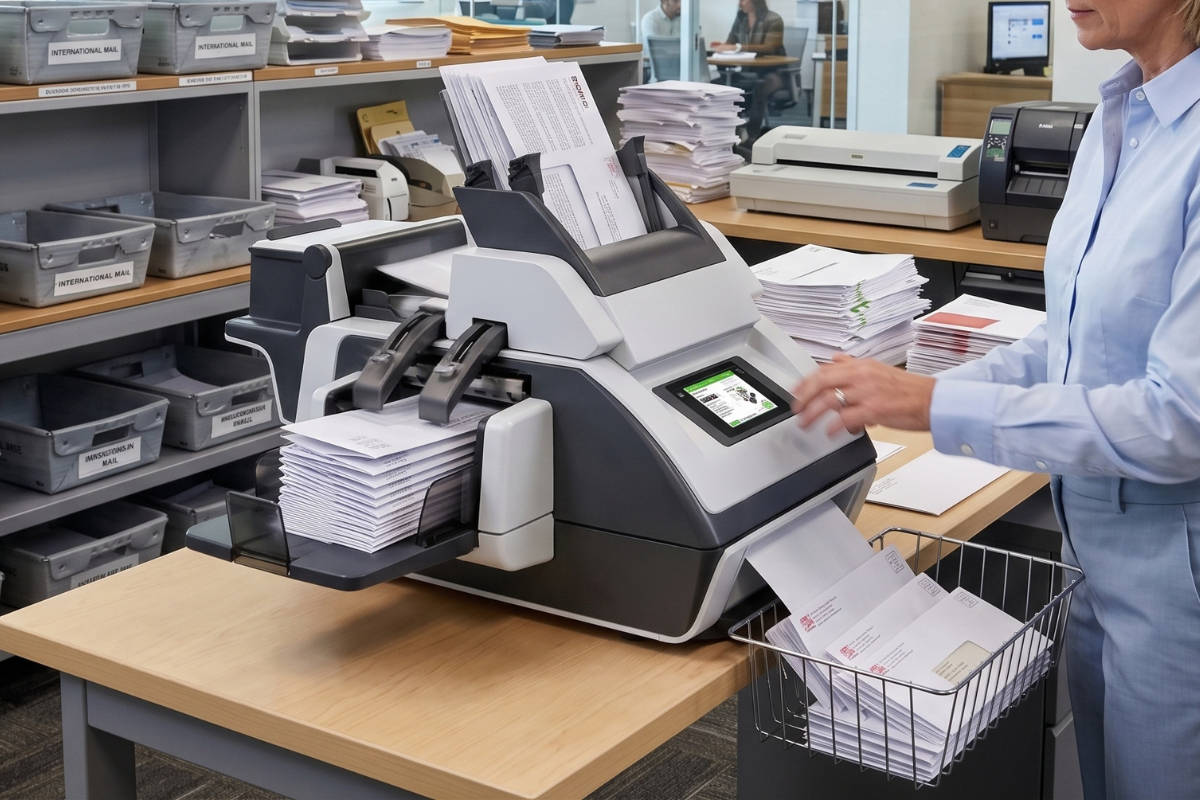
Preparing a few dozen envelopes by hand is manageable. Preparing hundreds or thousands on a recurring schedule is a different operation entirely. Staff members have to collate pages, keep documents together, fold them consistently, insert additional materials, stuff envelopes, and seal each piece without mixing up recipients.
As volume increases, the problem is not only speed. Variable-page statements, reply envelopes, inserts, sensitive documents, and recurring deadlines make accuracy just as important. The right equipment can automate much of this process, but choosing a machine based on speed alone can leave a mailroom with too much capacity, too little flexibility, or features that do not match the work being produced.
A better purchase starts with understanding the mail itself.
What Is a Folder Inserter Machine?
A folder inserter machine, also called an envelope inserter or envelope stuffing machine, automates the process of preparing documents for mailing. Depending on the configuration, the equipment can collate documents, fold them, add inserts or reply envelopes, place everything into the correct envelope, and seal the finished mailpiece.
Modern envelope inserting systems range from compact equipment for everyday office mail to production systems designed for complex, high-volume applications. Lineage currently offers systems capable of handling everything from straightforward single-page letters to variable-page and personalized mailings.
The challenge is determining how much capability your operation actually needs.
Start With Your Monthly Mail Volume
Mail volume is one of the first factors to evaluate, but monthly totals only tell part of the story.
An organization sending 20,000 pieces evenly throughout the month has a different requirement from an organization that processes 20,000 statements during a three-day billing cycle. Peak workload matters because the machine must be able to complete critical jobs within the available production window.
Consider both average monthly volume and the size of your largest recurring run. Also account for expected growth. Buying a system that operates near maximum capacity from day one can create another bottleneck as mail volume increases.
Folder inserters are available in tabletop, desktop, and production configurations, allowing organizations to match capacity more closely to their workload rather than purchasing equipment based only on the fastest advertised processing speed.
Evaluate the Documents You Actually Mail
Two organizations sending the same number of envelopes may need very different machines.
A business mailing one-page notices into standard envelopes has a relatively simple application. A financial institution sending variable-page statements with disclosures, or a healthcare organization processing patient communications, has more complex requirements.
Consider the number of pages in each mailpiece, paper sizes, envelope sizes, fold types, inserts, return envelopes, and whether the page count changes from recipient to recipient. Some operations also need to combine materials from multiple feeders into the same envelope.
Feeder capacity becomes especially important for recurring jobs. A system that requires constant reloading may technically handle the volume, but it can still demand too much operator attention.
For organizations that produce variable customer communications, document management software can also become part of the workflow before documents reach the inserting equipment.
Decide How Much Document Integrity You Need
Accuracy becomes more important when documents contain account information, financial data, healthcare information, or other sensitive material.
Advanced folder inserters can use scanning technology to read barcodes and other document marks, helping the equipment determine which pages belong together and which recipient should receive them. Current equipment can support variable-page processing and automated document matching rather than relying entirely on manual sorting.
That capability is important when a mailing error would mean more than reprinting an envelope. Sending one customer’s statement, invoice, or confidential correspondence to another recipient can create operational, privacy, and customer service problems.
When evaluating machines, ask how the system verifies document sets, handles exceptions, and records completed jobs. A machine that can fold and insert quickly is useful. A machine that can help verify that the correct documents stay together may be considerably more valuable for sensitive applications.
Look Beyond the Folder Inserter
A folder inserter is usually one part of a larger mailing workflow.
Before documents are printed, addressing software can help improve address quality and prepare mailing data. Once pieces are assembled, a mailing system can weigh mail and apply postage. Organizations that need better visibility into departmental mailing costs may also benefit from postage accounting software.
Evaluating these processes together can expose bottlenecks that would be missed by looking at the inserter alone. Faster inserting provides limited value if employees still spend hours correcting addresses, manually preparing files, or moving finished mail through an inefficient postage process.
The goal should be a connected mailing workflow that moves documents from data and printing through assembly and postage with as little unnecessary manual handling as practical.
Consider Ease of Use, Service, and Downtime
Equipment specifications matter, but the experience after installation matters too.
Consider who will operate the machine and how frequently jobs change. Saved job settings, guided setup, intuitive controls, and automatic adjustments can make a meaningful difference when several employees use the same equipment.
Service should also be part of the buying decision. A high-capacity machine does not help when it is unavailable during a critical billing or statement run. Ask how maintenance is handled, where technicians are located, what training is provided, and what support is available when an issue affects production.
The purchase decision should account for the full operating relationship, not only the equipment installed on day one.
Know When Buying Equipment Is Not the Best Fit
Not every organization should bring more mail production equipment in-house.
Mail volume that changes dramatically throughout the year, limited staffing, restricted production space, or complex compliance requirements may make outsourcing worth evaluating. Instead of purchasing and operating equipment internally, organizations can use print-to-mail outsourcing to transfer printing, inserting, preparation, and mailing to an external production environment.
The right choice depends on workload, staffing, control requirements, deadlines, and long-term costs. For some organizations, ownership provides the right level of control and flexibility. For others, outsourcing removes an operational burden that does not need to remain in-house.
Choose the Folder Inserter Around the Workflow
The best folder inserter is not automatically the fastest or largest machine. It is the equipment that matches your mail volume, document complexity, security requirements, staffing, production schedule, and expected growth.
With more than 38 years of experience, Lineage Accelerate helps organizations evaluate mailing operations and select equipment around the work they actually produce. That includes examining the entire process rather than recommending a machine based on a single specification.
If you are comparing folder inserter machines or replacing aging equipment, request a free business assessment. Lineage can review your current mail volume, applications, workflow, and future needs to help determine the right level of automation for your operation.